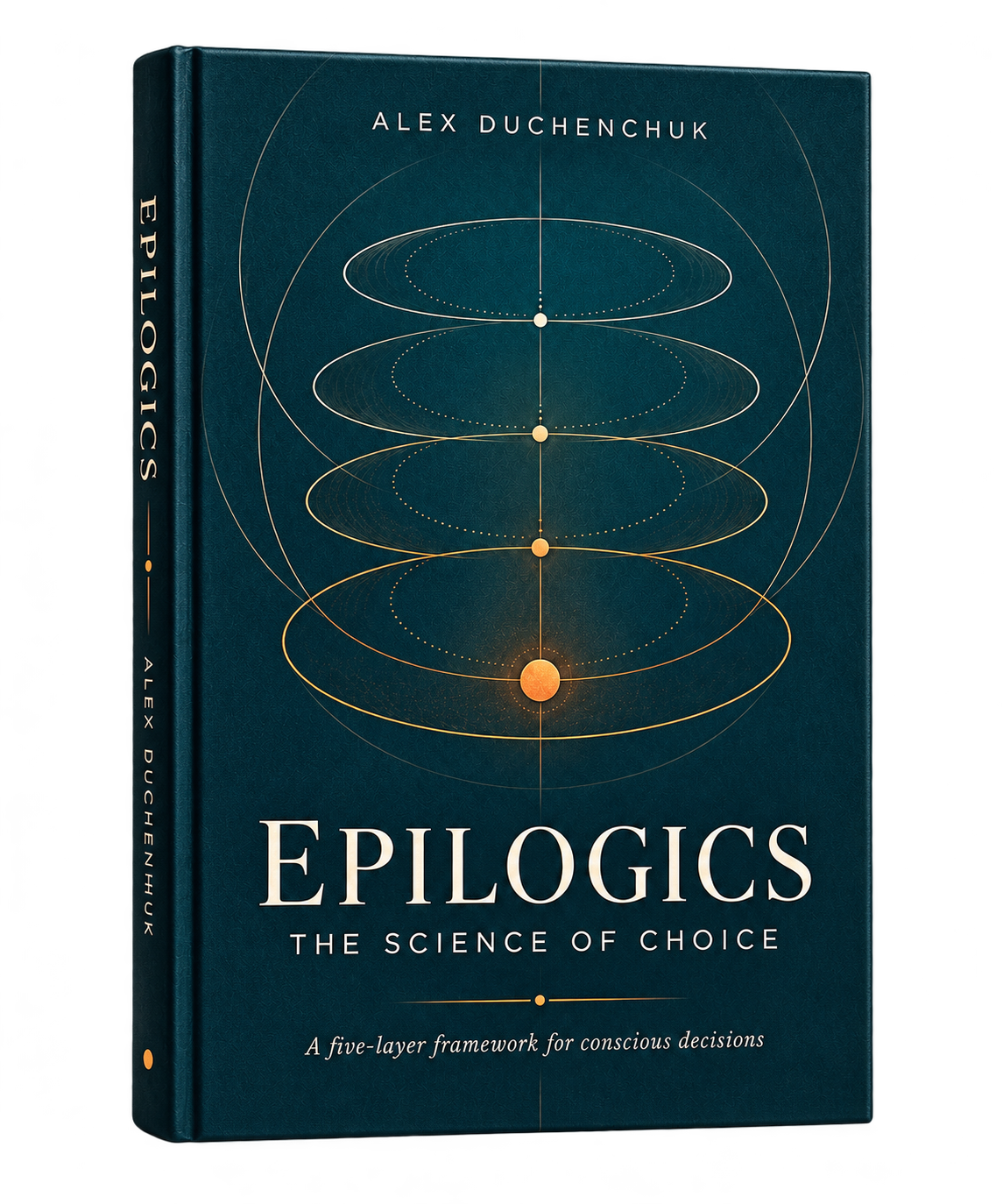
We usually picture choice as a fork in the road: two paths, a moment of hesitation, a step. The picture is tidy, and it hides most of what matters. By the time we stand at the fork, someone has already drawn the map.
A more honest image might be writing. An author does not choose between finished sentences; they compose them, revise them, and live with what they have made. Choice in this sense is not selection from a menu but authorship — the slow work of deciding what kind of story a life is becoming.
The question is not only which option to take, but who wrote the options.
Menus and margins
Many environments are designed as menus. They present a small set of pre-written possibilities and make everything else feel unreasonable. Authorship begins in the margins of the menu: in noticing what has been left out, and in asking whether it should be.
This is the thread I am following in the book project Epilogics, and it rests on the layered view of agency set out in The Architecture of Personal Agency.
Filed underChoice