Most of what we rely on is designed to be temporary. Careers reorganise themselves, technologies replace the tools we had only just learned, institutions revise their promises, and the maps we inherited describe a country that no longer quite exists.
It is tempting to respond by holding on harder — to a role, a belief, an identity that once made sense. But grip is not the same as stability. The tighter we hold to what is changing, the more each change feels like a loss of self.
Not what we hold, but how we hold it
A more useful question may be: what remains constant in us when the circumstances do not? Not a fixed set of opinions, but a way of meeting the world — the capacity to notice, to choose, and to give things meaning. These are not possessions. They are practices, and practices travel with us.
Stability is not the absence of change. It is the presence of a centre that does not depend on it.
This is close to what I mean when I write about personal agency. Not independence from the world, and not control over it, but a quiet authorship over one’s own response to it.
Three things that travel
- Attention — what we choose to look at, and for how long.
- Choice — the recognition that, even under constraint, there is usually more than one way forward.
- Meaning — the stories we are willing to examine rather than simply inherit.
None of these is guaranteed. Each can be eroded by noise, haste or habit. But each can also be strengthened, and that work does not wait for calmer times. It is, if anything, most available when everything else is in motion.
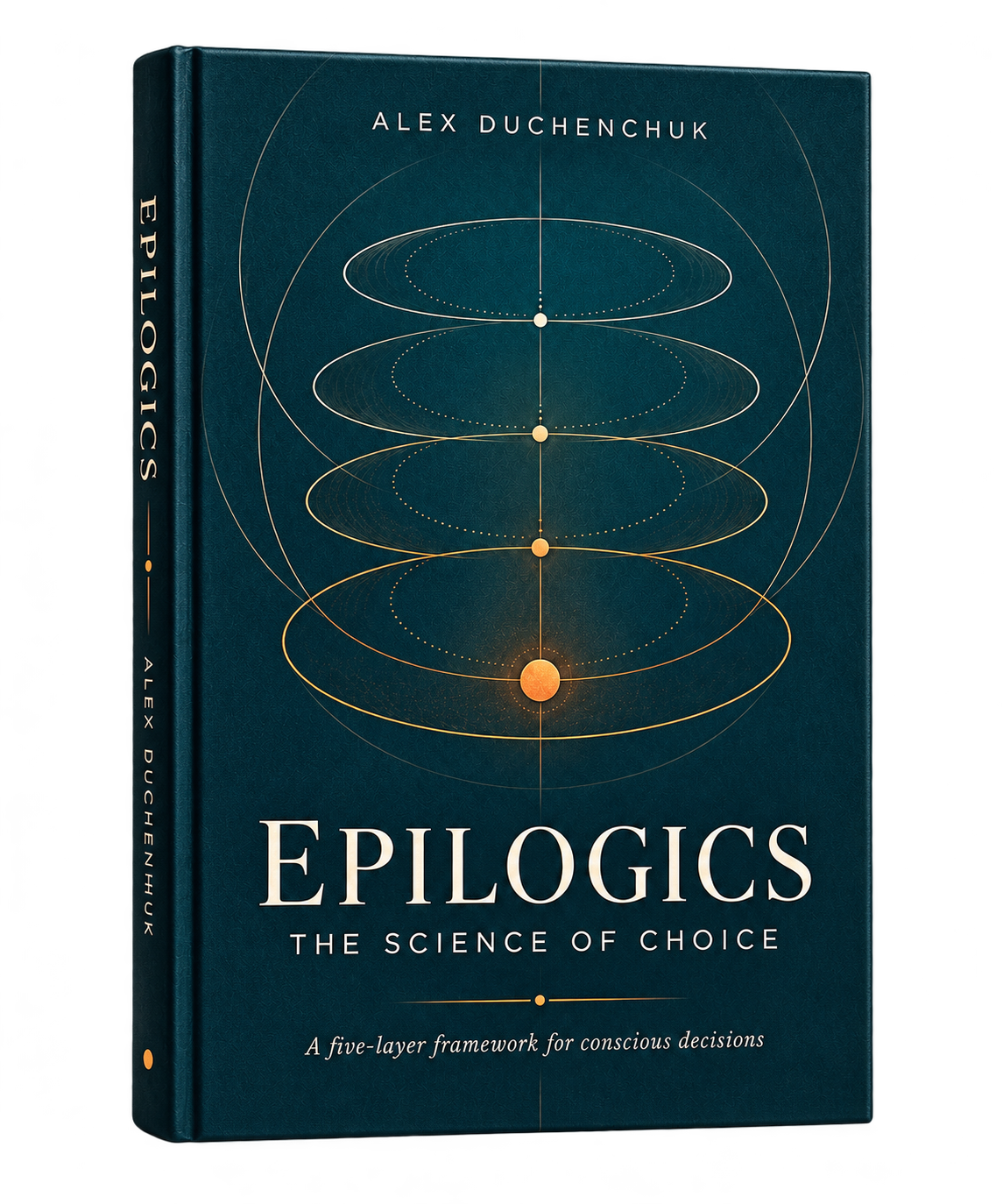
I am not certain this amounts to a principle that holds everywhere. It is a working hypothesis — one I return to in Epilogics and in the essays that follow.
Filed underMeaning